.jpg)
My Role
I led both design and product management efforts for Reflect. I designed the complete UI and UX, crafted the AI system prompt, wrote automated emails and the marketing website, and collaborated with engineers on implementation.
My Impact
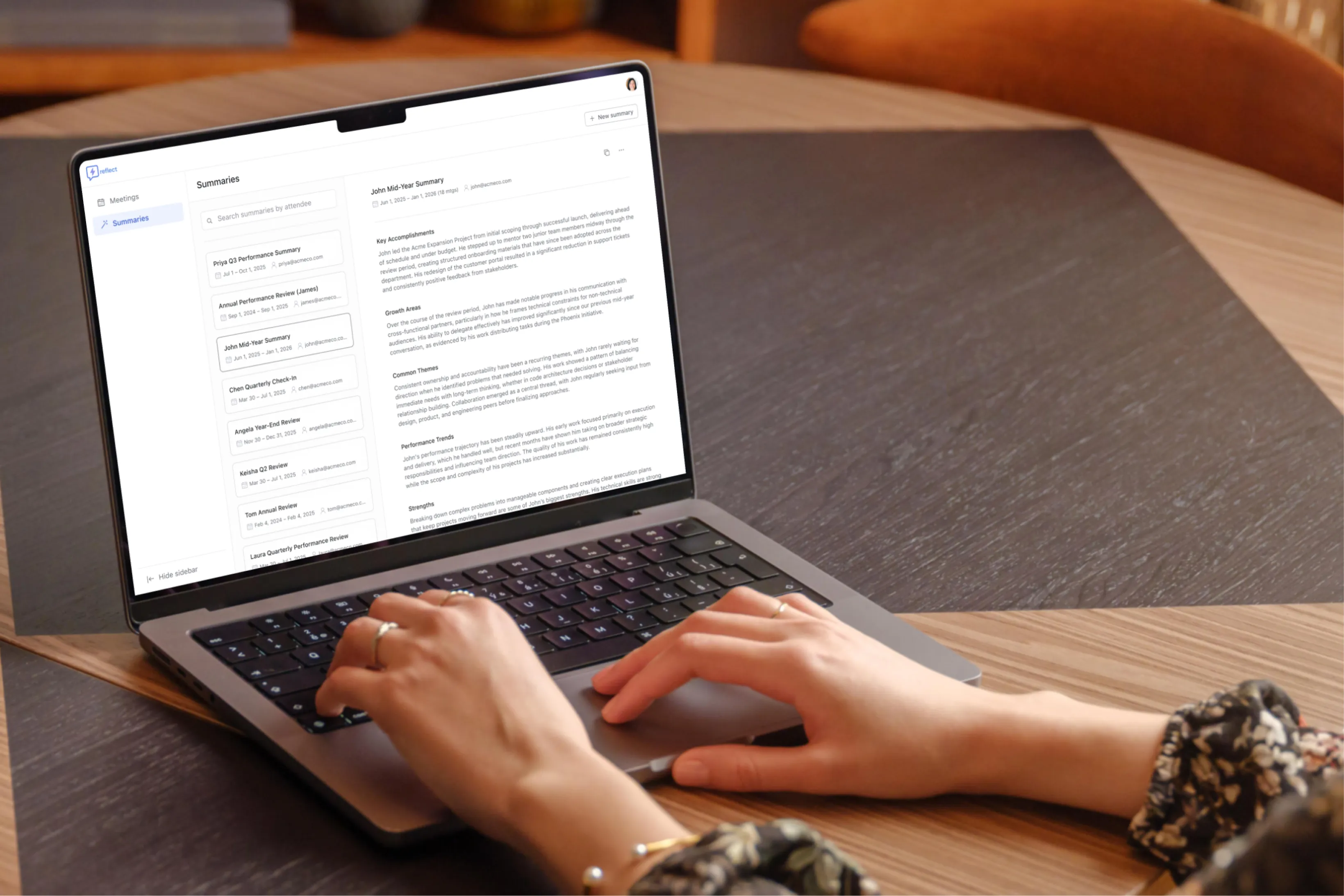
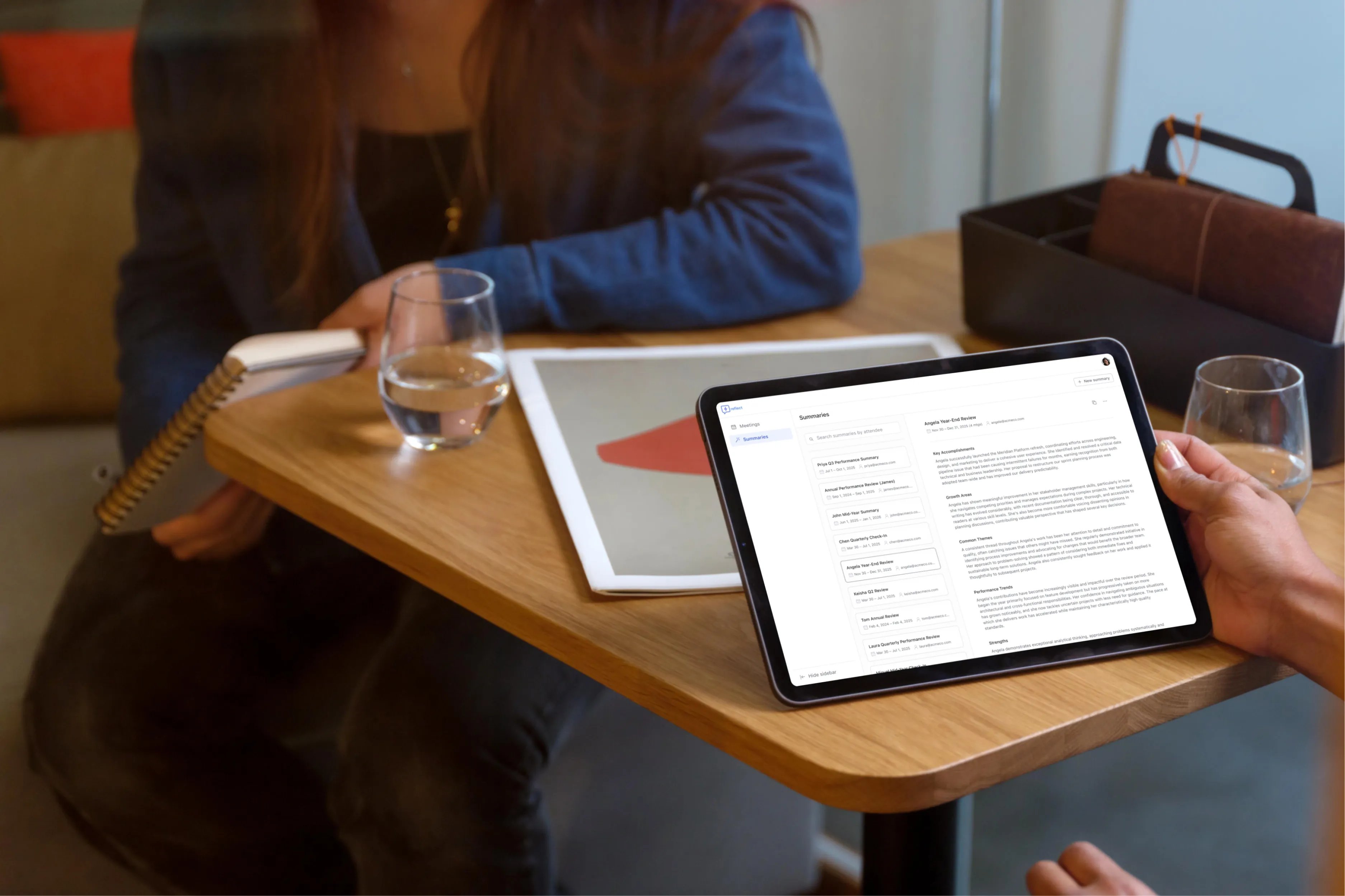
Under my product leadership, Reflect was designed and shipped in under 2 months. The fully responsive web app features a sleek, lightweight experience informed by feedback from experienced managers with 15+ years of leadership experience.
Duration
2 months (Sep – Nov 2025)
In a hurry? Here's everything you need to know, summarized 😎
Background
Managers often spend 2-3+ hours writing each performance or merit review. Many dread the process, yet their employees highly value the feedback these reviews provide. AI presented an opportunity to bridge this gap by generating performance reviews and removing the writing burden from managers’ shoulders.
My Process
The Result
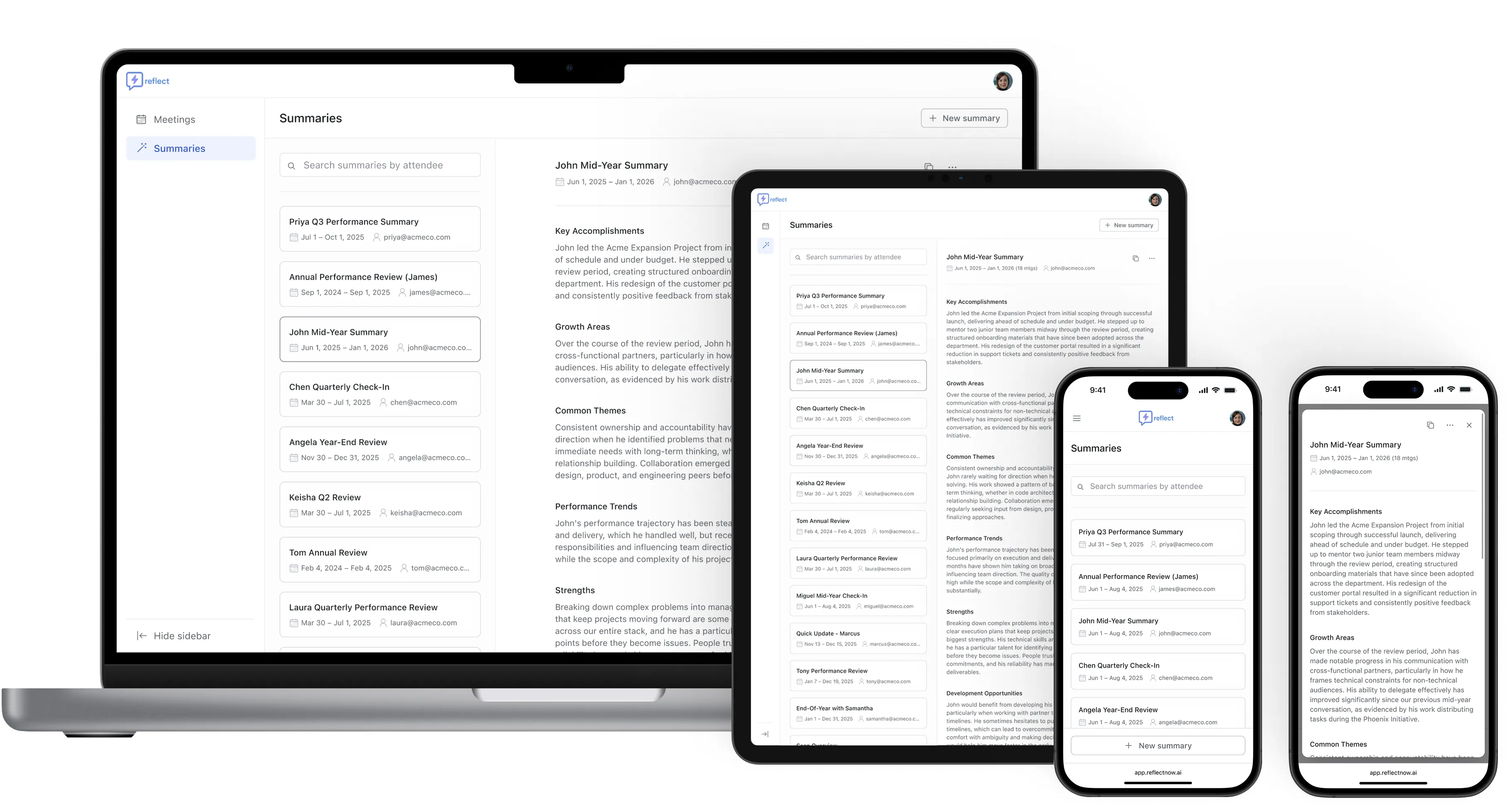
Reflect has shipped and is live. Managers capture meeting notes in 30–60 seconds after 1:1s, then generate AI summaries of their notes in just moments whenever needed. What historically took hours now takes minutes, while also reducing recency bias and memory gaps.
Full case study below ⬇️
The time investment is dramatic, and managers really feel it.
"...I used to spend four hours writing the review for each of my direct reports. Even though I only had six direct reports, that was still 24 hours twice a year; plus, I had all my peer feedback to write. It wasn’t as though the demands of the business slowed down just because it was review season.”
— Kim Scott, Former Manager at Google (source)
This reality reinforced the opportunity for a tool like Reflect: eliminate the writing and time burden for managers while preserving the quality and value employees expect from reviews.
I knew that a 30–60-second reflection flow was essential for adoption with already-busy managers.
Therefore, I designed each of the three submission steps to be very minimal. I used smart defaults like auto-focusing the text area to reduce clicks, and made one of the steps optional.
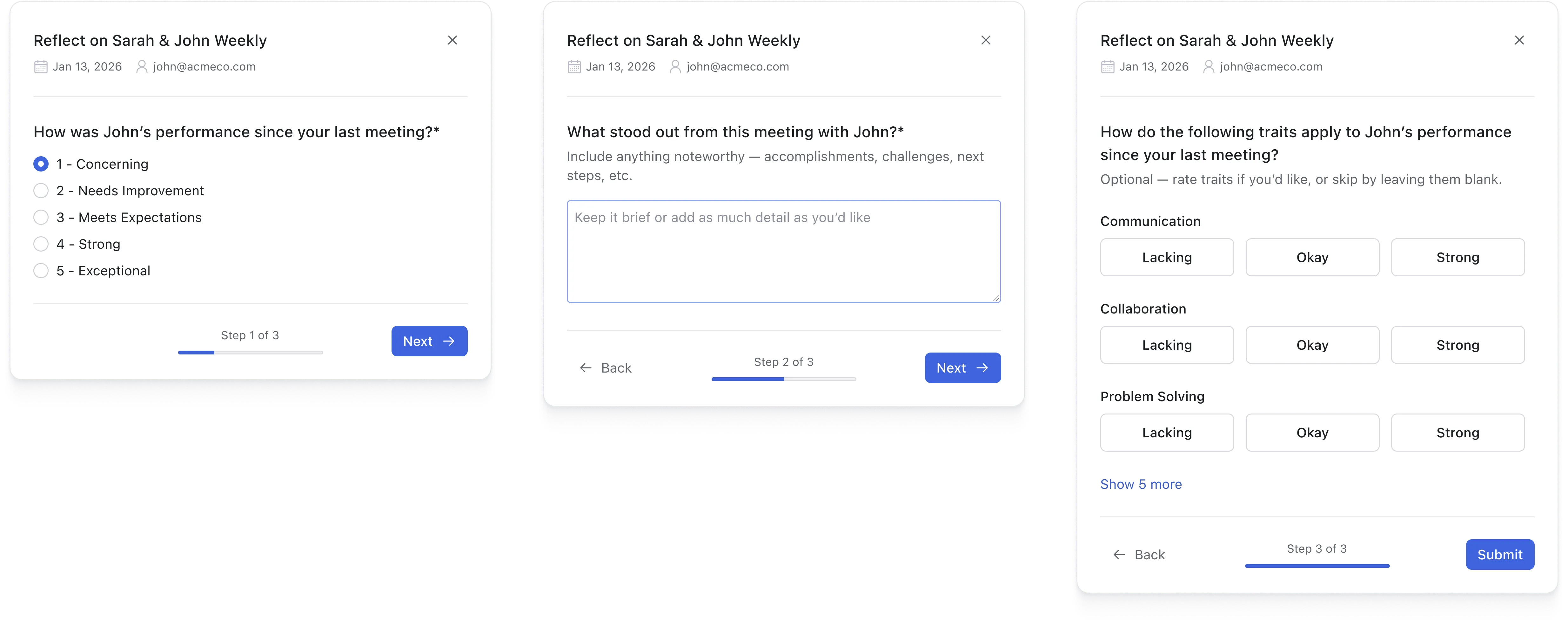
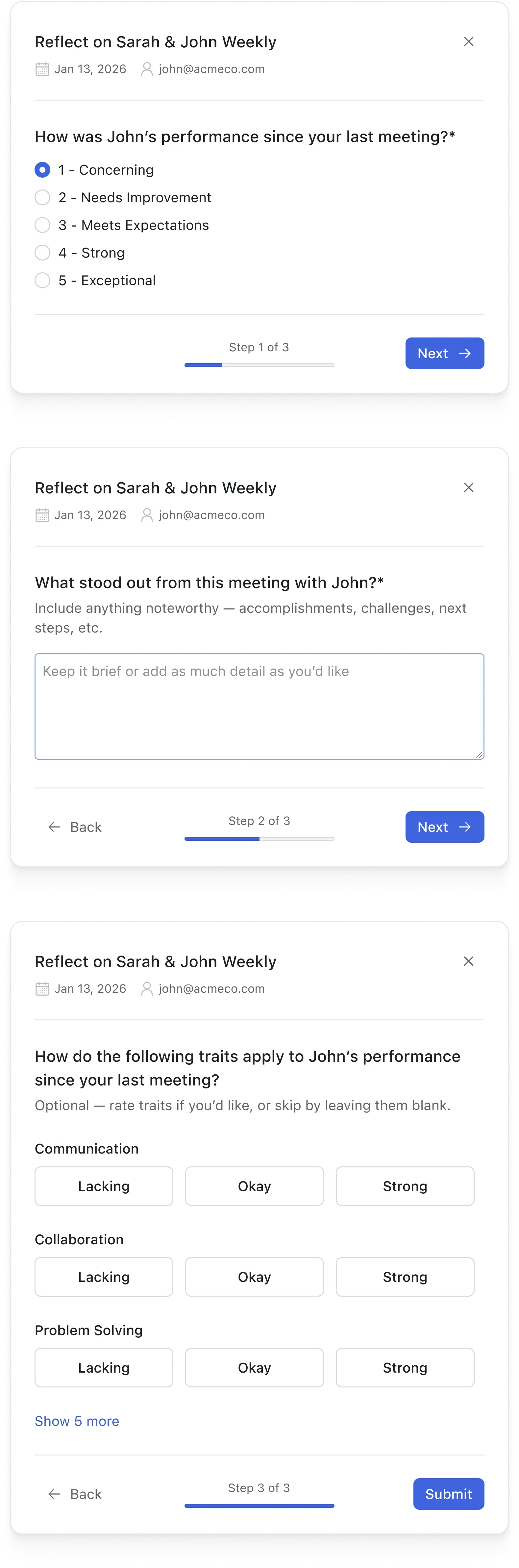
User feedback indicated that the numeric and trait rating steps of the original 3-step reflection flow created too much of a “performance review” feel, risking lower engagement and skewed ratings. One tester even remarked, "Managers will have an allergic reaction to [the performance scale and trait ratings]."
The feedback also revealed that if direct reports discovered they were constantly being rated & scored by their manager after every 1:1, it could reduce their authenticity and create unnecessary stress.


This feedback conflicted with Reflect’s core purpose: to help managers naturally capture meaningful observations over time, not to continuously assess or score their direct reports.
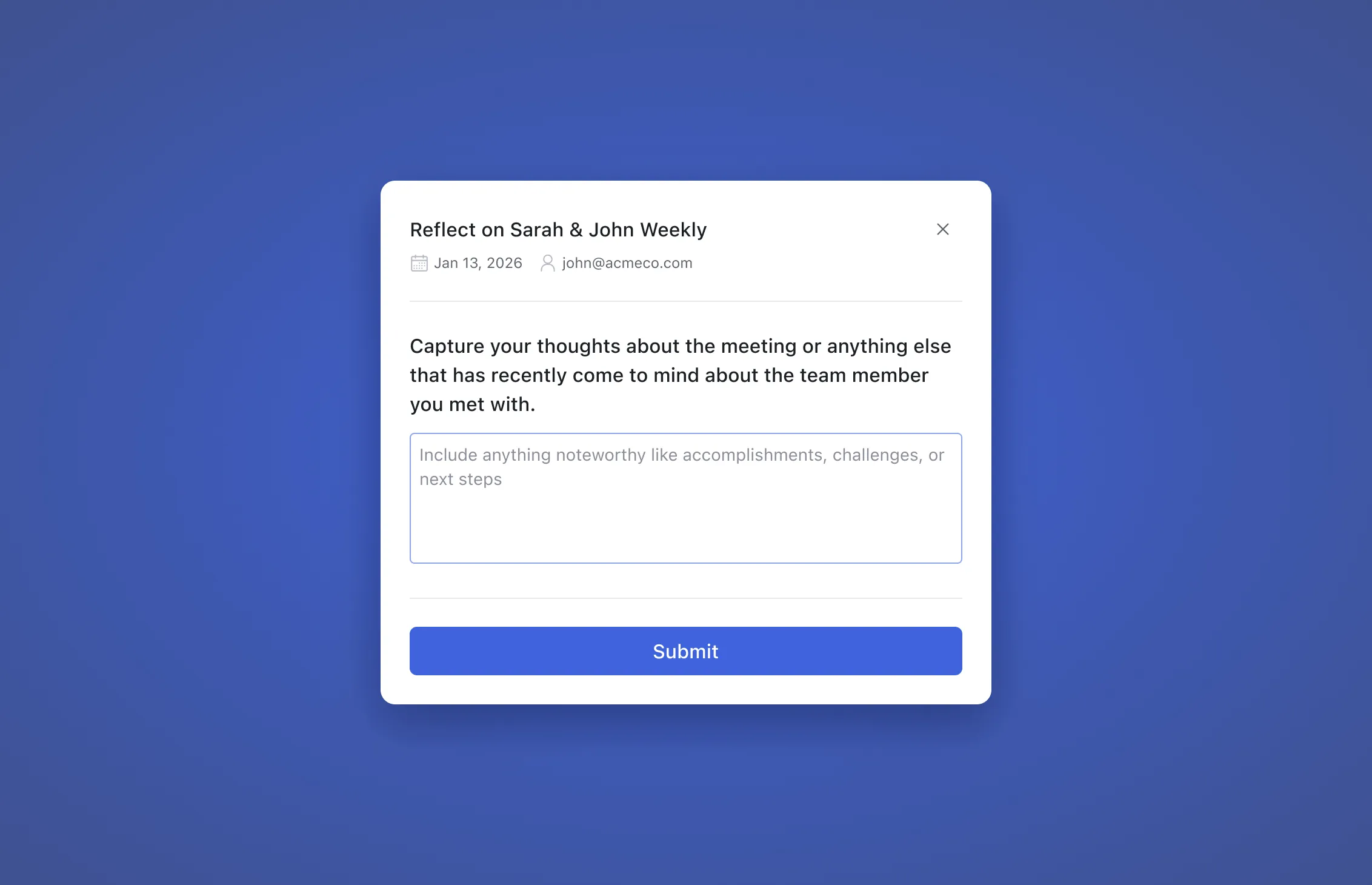
After further iteration, I decided to remove those steps altogether and reshaped the flow around a single, open-ended reflection prompt with very intentional language.
The simplified experience has been well-received and reduces the pressure that the rating elements were previously introducing.
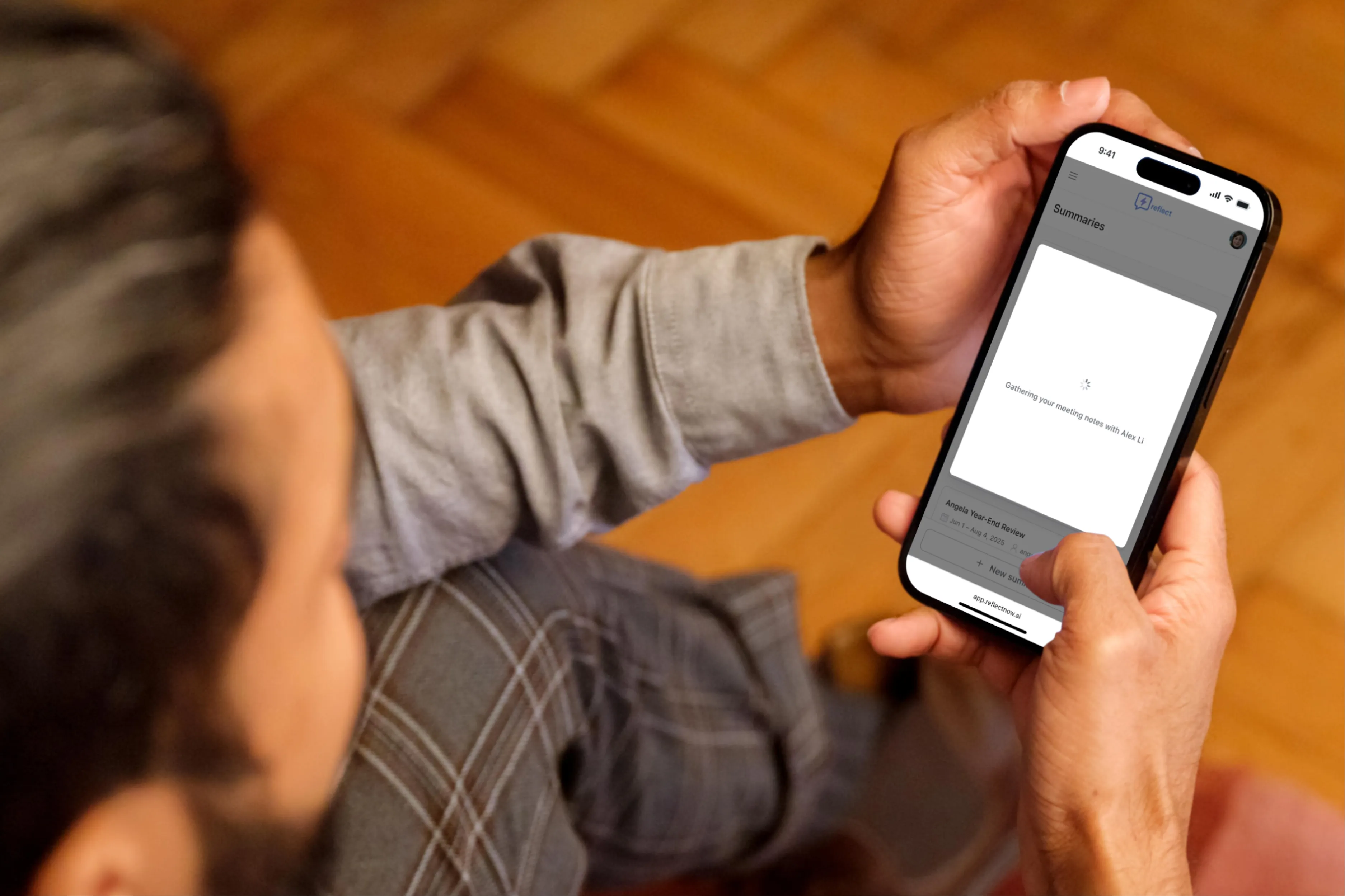
While AI summaries generate, users see a sequence of phrases paired with a loading spinner. I designed this two-fold system to build trust and manage expectations, and I created a Figma Make prototype of the experience to more clearly communicate my vision with the engineers.
To provide transparency: Each phrase shows users exactly what's happening. The copy dynamically pulls in specifics from their selections so they understand what the AI is processing, including:
Gathering your meeting notes with Alex Li
Reviewing key points across 16 meetings
Preparing your summary for 8/14/2025 to 1/14/2026
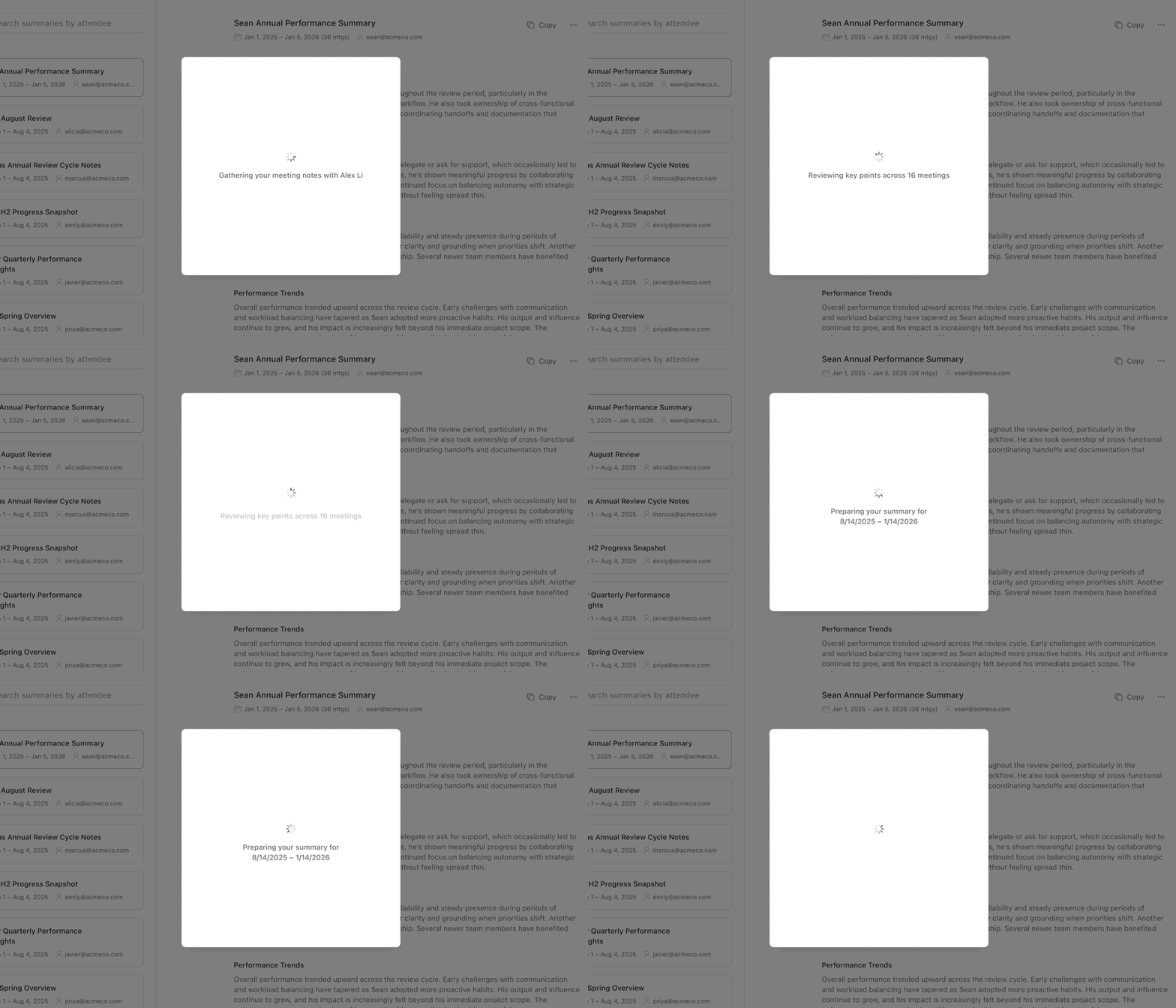
To handle latency: The first three phrases always appear, but if generation takes longer than expected, additional phrases with a more supportive tone kick in.
This keeps users informed rather than wondering if the system is stuck or if something broke.
Your summary is almost ready...
Thank you for your patience — your summary will be ready shortly…
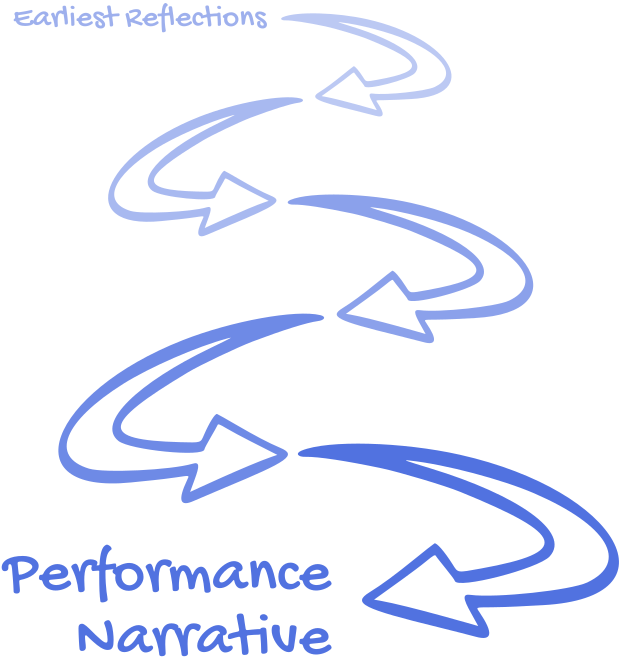
I wrote the system prompt (in collaboration with ChatGPT) with instructions to generate narrative summaries that tell the full story of an employee's progression over time.
By weaving together reflections from the manager's selected period in a narrative fashion, the AI summary would provide rich context and could connect dots across projects and performance trends, even if the reflections being summarized spanned months.
To minimize hallucinations, I explicitly included non-negotiable instructions in the system prompt like: "Use only the provided notes. Do not invent or infer information that is not clearly supported by the manager’s reflections."
I wrote unique empty states for each section, and wrote instructions into the system prompt to return these phrases when meaningful content couldn't be generated rather than hallucinating filler content.
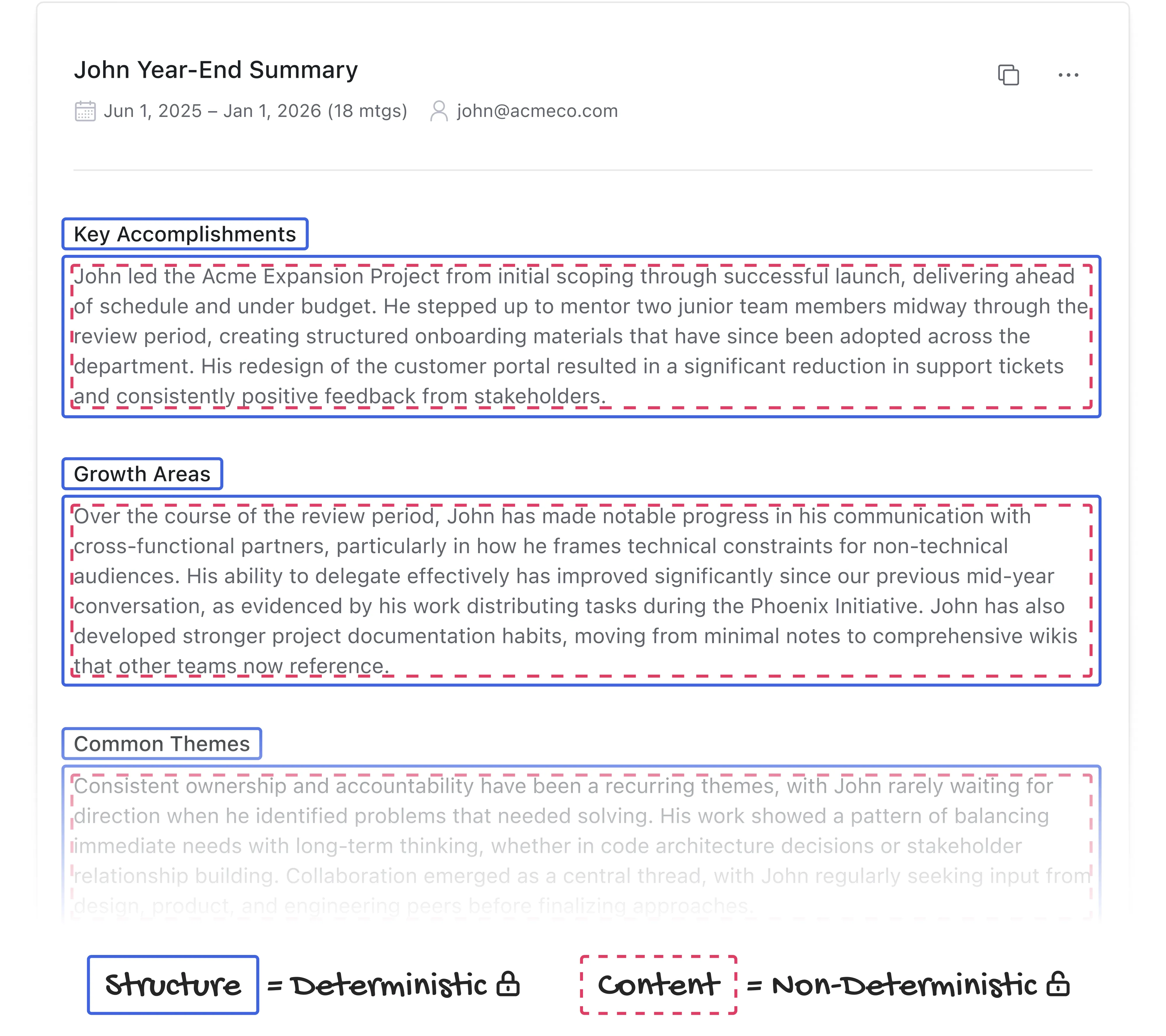
I structured the AI output to be deterministic (always populating the same UI sections) while keeping the content itself non-deterministic (varying and based on the actual reflections). This ensured the AI-generated text would fit cleanly into the summary interface I’d designed.
The specific UI sections for the summary (key accomplishments, growth areas, etc.) were determined through my conversations with experienced managers, and cover the breadth of categories they felt were essential for useful, meaningful performance review discussions.